
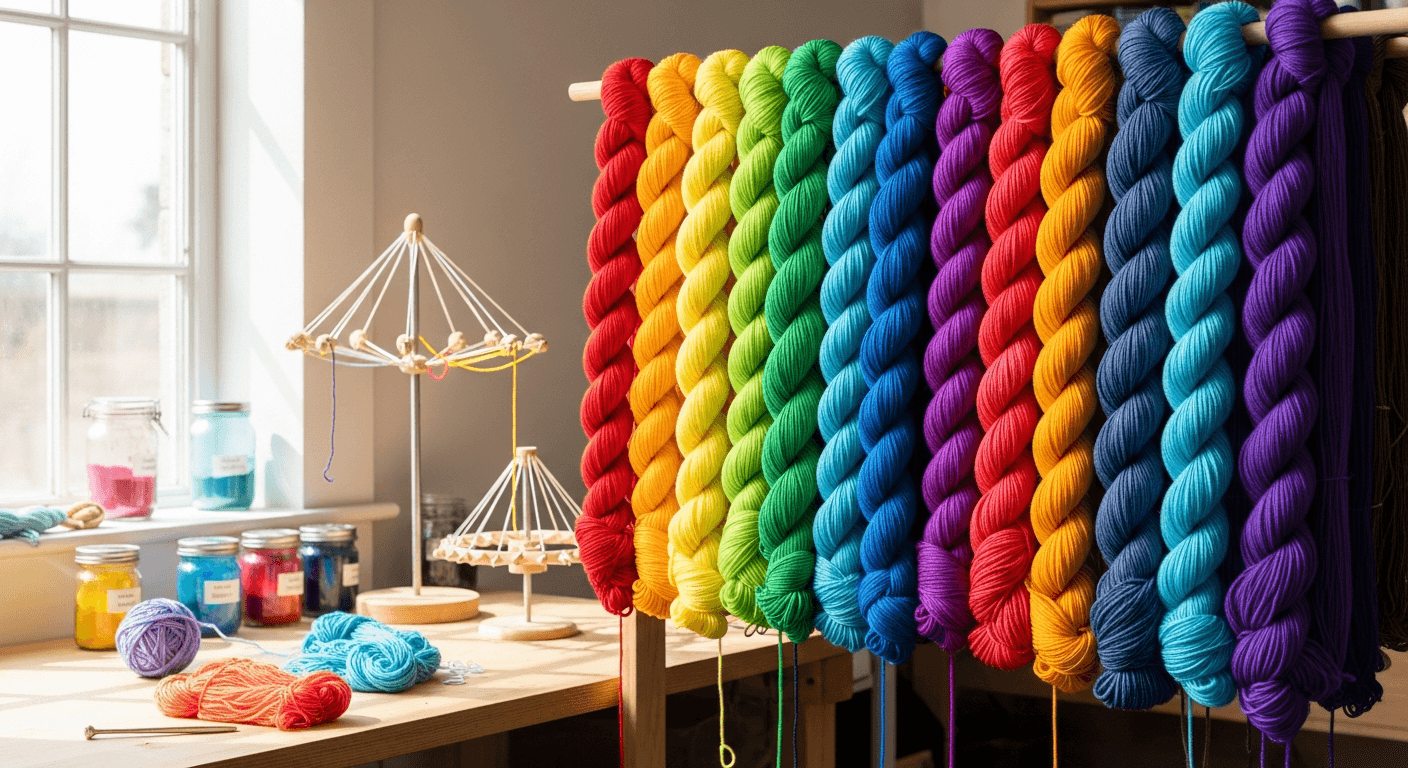
The Art of Hand-Dyeing Yarn: How Artisan Colors Are Made
By Emma Rodriguez
There's something magical about hand-dyed yarn. Each skein tells a story — the colors blending and shifting in ways that machine-dyed yarn simply can't replicate. But how do artisan dyers create these stunning colorways?
The Dyeing Process
Hand-dyeing begins with undyed yarn, often called "bare" or "natural" yarn. The fiber is first soaked in a mordant solution (usually citric acid for protein fibers like wool) to help the dye bond permanently to the fibers.
Techniques That Create Unique Effects
Kettle dyeing produces subtle, semi-solid colorways with gentle tonal variations. The yarn simmers in a dye bath, and natural variations in how the yarn absorbs color create a rich, organic look.
Hand-painting is where the dyer applies different colors directly to sections of the yarn using squeeze bottles, brushes, or even spoons. This creates bold, multi-colored yarns like our Hand-Dyed Sock Yarn in Ocean Blues.
Speckle dyeing creates playful confetti-like dots of color across a base shade. The dyer flicks or sprinkles concentrated dye onto the yarn for a festive, modern look.
Why Hand-Dyed Yarn Is Special
Because each skein is dyed individually, no two are exactly alike. This uniqueness is part of the charm — when you knit or crochet with hand-dyed yarn, your finished piece is truly one of a kind.